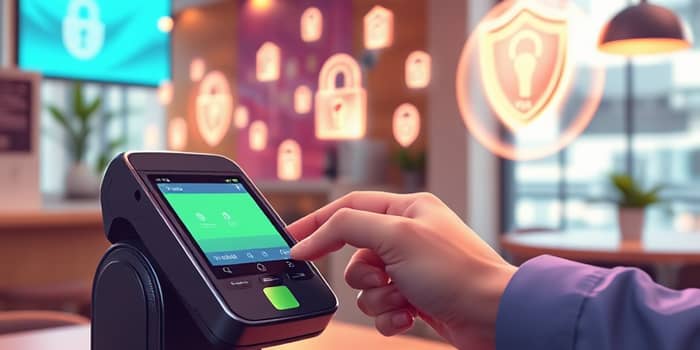
In an era where speed and convenience dominate, contactless payments have seamlessly integrated into daily life.
With a simple tap, transactions are completed in seconds, eliminating the need for physical card insertion or PIN entry.
This innovation offers unparalleled ease, but it also necessitates a deep understanding of the security mechanisms that protect users.
As adoption soars, concerns about fraud and data breaches have prompted a closer look at how these payments work.
This article delves into the technologies, safety measures, and practical tips to ensure your contactless transactions remain secure and efficient.
Contactless payments rely on advanced communication methods to facilitate quick exchanges.
At their core, they use NFC (Near Field Communication) and RFID (Radio Frequency Identification) to transmit data wirelessly.
These technologies allow devices like cards or smartphones to communicate with point-of-sale terminals at short distances, typically under 10 centimeters.
The process involves sending encrypted data via radio waves, ensuring that sensitive information is protected during transmission.
Unlike traditional methods, contactless systems generate unique codes for each transaction, enhancing security.
This foundation sets the stage for robust security features that safeguard every tap.
To combat potential threats, contactless payments incorporate multiple layers of protection.
Tokenization replaces actual card details with unique, disposable tokens for each transaction.
This means that even if data is intercepted, it cannot be reused for fraudulent activities.
Encryption ensures that all transmitted information is scrambled, making it unreadable to unauthorized parties.
Additionally, authentication methods like biometrics—such as fingerprint or facial recognition—add an extra verification step.
These measures collectively create a secure ecosystem for contactless transactions.
Setting appropriate transaction limits is crucial for minimizing fraud impact.
Many banks and card issuers recommend low thresholds for contactless payments to limit potential losses.
For instance, in regions like the European Union, transactions under a certain amount—often around 50 euros—may not require a PIN.
However, cumulative limits trigger PIN requests after multiple small transactions to prevent abuse.
By understanding these limits, consumers can better protect their finances.
Despite security advances, contactless payments are not immune to risks.
Proximity fraud, such as skimming, occurs when unauthorized readers capture data in crowded places.
This can lead to ghost tapping incidents where cards are scanned without physical contact.
Lost or stolen cards pose a threat, as they can be used for multiple small transactions until reported.
Awareness of these risks empowers users to take preventive actions.
Consumers can adopt several habits to enhance their contactless payment safety.
First, configure low transaction limits and enable real-time notifications through banking apps.
Using mobile wallets with biometric authentication is often more secure than physical cards.
Physical protections like RFID-blocking wallets can help, though they are not foolproof.
These steps create a proactive defense against potential threats.
For companies accepting contactless payments, compliance with security standards is essential.
Adhering to PCI DSS and EMV protocols ensures that transaction data is handled securely.
Implementing fraud detection systems, such as AI for anomaly monitoring, can identify suspicious patterns.
By following these practices, businesses can foster a secure transaction environment.
Different payment methods offer varying levels of security, and understanding these can guide user choices.
Contactless cards provide speed and dynamic tokens but are vulnerable to proximity skimming.
Mobile wallets integrate biometrics and remote locking, making them more secure options.
Traditional chip and PIN methods offer high authentication but are slower in comparison.
Overall, when standards are met, contactless payments are secure, with mobile methods leading in safety.
Contactless payments represent a significant leap forward in financial technology.
By leveraging advanced security measures and adhering to recommended practices, users can enjoy their benefits without undue risk.
Staying informed about technologies, limits, and vulnerabilities is key to maintaining security.
As the landscape evolves, ongoing vigilance and adaptation will ensure that contactless payments remain a safe and convenient option for everyone.
Referencias